Home Charging vs Destination Charging
5 Mins Read
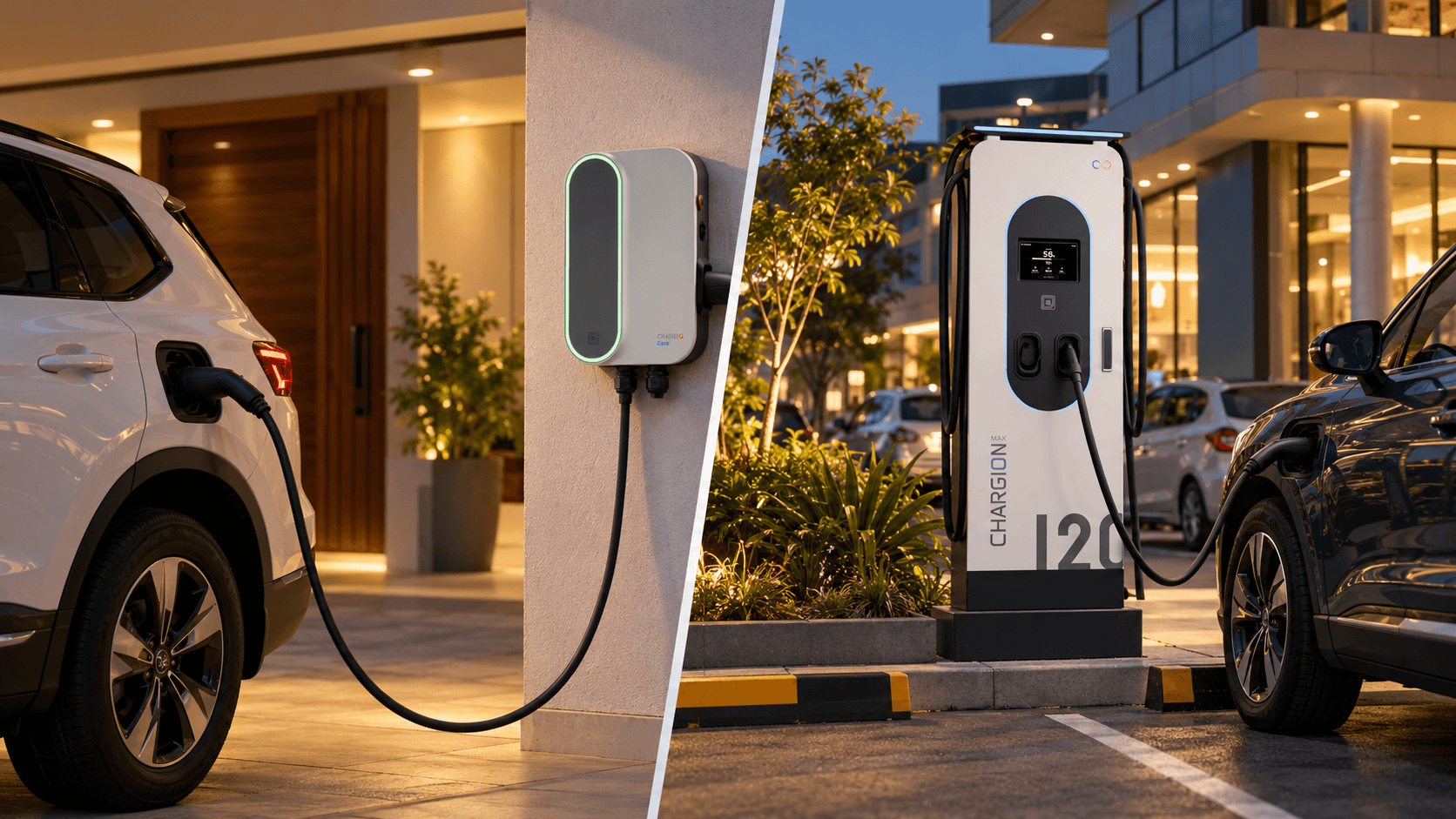
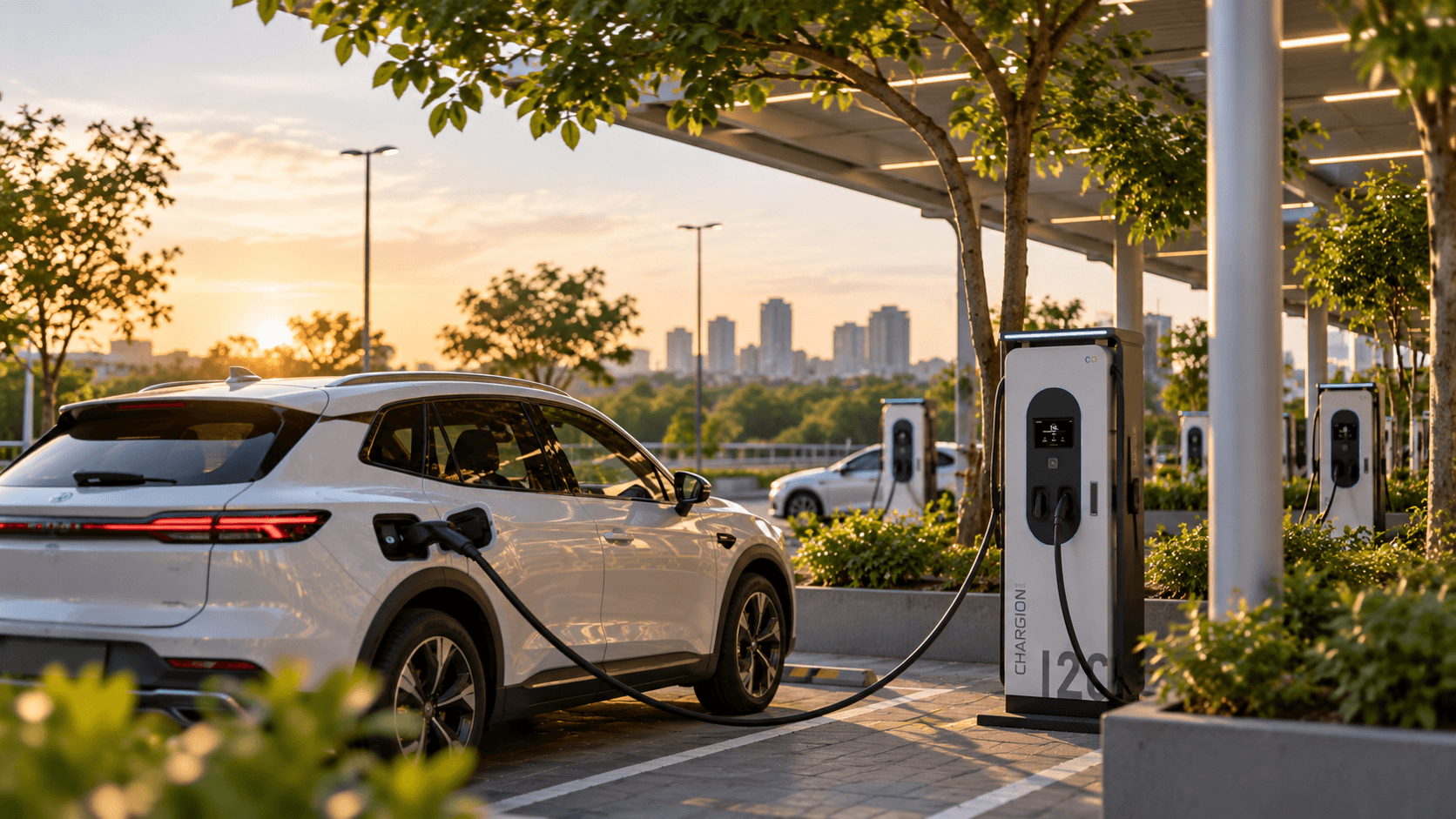
EV drivers charge in three main ways: at home, at a destination, and at fast-charging stops on the road.
Home and destination charging together cover most of the charging people do, and both are mostly served by AC chargers.
What Is Home Charging?
Home charging means charging at the owner's residence: a private garage, an apartment parking spot, or a housing society. The car is parked for 8 to 12 hours, usually overnight, so a slow charger is enough.
Typical equipment
- AC chargers of 3.3 kW, 7.4 kW or 11 kW
- Wall-mounted, compact units
- Single-phase supply for most homes, three-phase where available
Key features buyers look for
- Compact, weatherproof design (IP54 or IP65)
- Scheduled charging to use off-peak tariffs
- App control and charging history
- Earth-fault, surge and over-current protection
- Easy installation with a simple mounting kit
What Is Destination Charging?
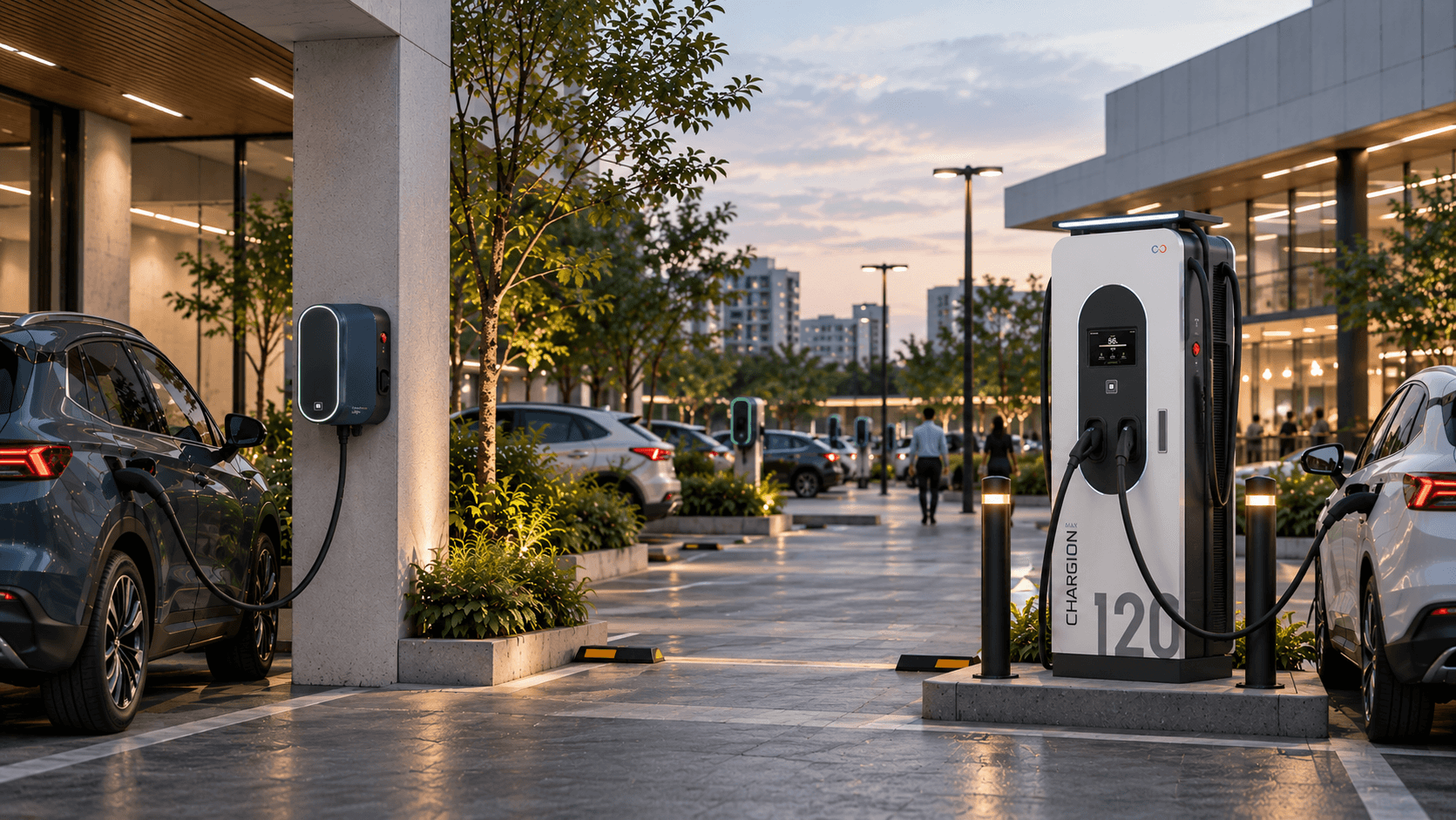
Destination charging means charging at a place where the driver is parked for a few hours: hotels, malls, offices, restaurants, hospitals, airports and tourist spots. The car charges while the driver does something else.
Typical equipment
- AC chargers of 7.4 kW, 11 kW and 22 kW
- Wall-mounted or pedestal units
- Sometimes a 30 kW DC charger at higher-traffic sites
Key features buyers look for
- OCPP support for network management
- RFID, app or QR-based access
- Payment integration (UPI, cards) for billing users
- Energy metering for each session
- Load management across multiple chargers
- Durable outdoor build with anti-vandal design
Home vs Destination Charging Comparison
| Feature | Home Charging | Destination Charging |
|---|---|---|
| Location | Homes, societies, private parking | Hotels, malls, offices, public parking |
| Parking time | 8 to 12 hours | 1 to 6 hours |
| Typical power | 3.3 to 11 kW | 7.4 to 22 kW |
| Users | Single owner or a few residents | Many different drivers |
| Billing | Usually not needed | Needed (pay per use or free for guests) |
| Connectivity | Optional, app for convenience | Important: OCPP and backend software |
| Access control | Private use | RFID, app or QR |
| Buyer | Individual owner, society | Business owner, property manager, CPO |
| Priority | Low cost, simple, safe | Reliability, billing, network management |
Business Opportunity for Vendors
Home charging
- A large volume market that grows with every EV sold
- Sold through dealers, EV showrooms, electricians and online
- Buyers are price-sensitive and want quick installation
Destination charging
- Higher value per order, since a site often installs several chargers
- Buyers include hotels, malls, corporate parks and hospitals
- Recurring opportunities in software, maintenance and network services
Which Product Range to Offer Under Your Brand
- Home range: 3.3 kW and 7.4 kW compact AC chargers
- Destination range: 11 kW and 22 kW AC chargers with OCPP, RFID and metering
- Premium option: a 30 kW DC charger for busy commercial sites
FAQs
1. What power rating is best for home charging?
7.4 kW works well for most homes with a suitable single-phase supply. Where the supply and the car allow it, 11 kW three-phase gives faster charging.
2. Do destination chargers need OCPP?
For any site with multiple users or billing, yes. OCPP lets the owner manage chargers, set tariffs and monitor usage remotely.
3. Can one charger work for both uses?
Yes, if it supports app control, RFID and OCPP. Many white-label models are built for both.
4. Should hotels and malls choose AC or DC?
AC works for most, since guests stay for hours. Add DC only if the site sees short stops and heavy traffic.
Want to sell your own branded home and destination chargers? We manufacture AC chargers in multiple power ratings under white-label, with custom branding, OCPP and app options. Contact us for specifications and a quote.