AC vs DC EV Chargers: Which One Should You Choose?
5 Mins Read
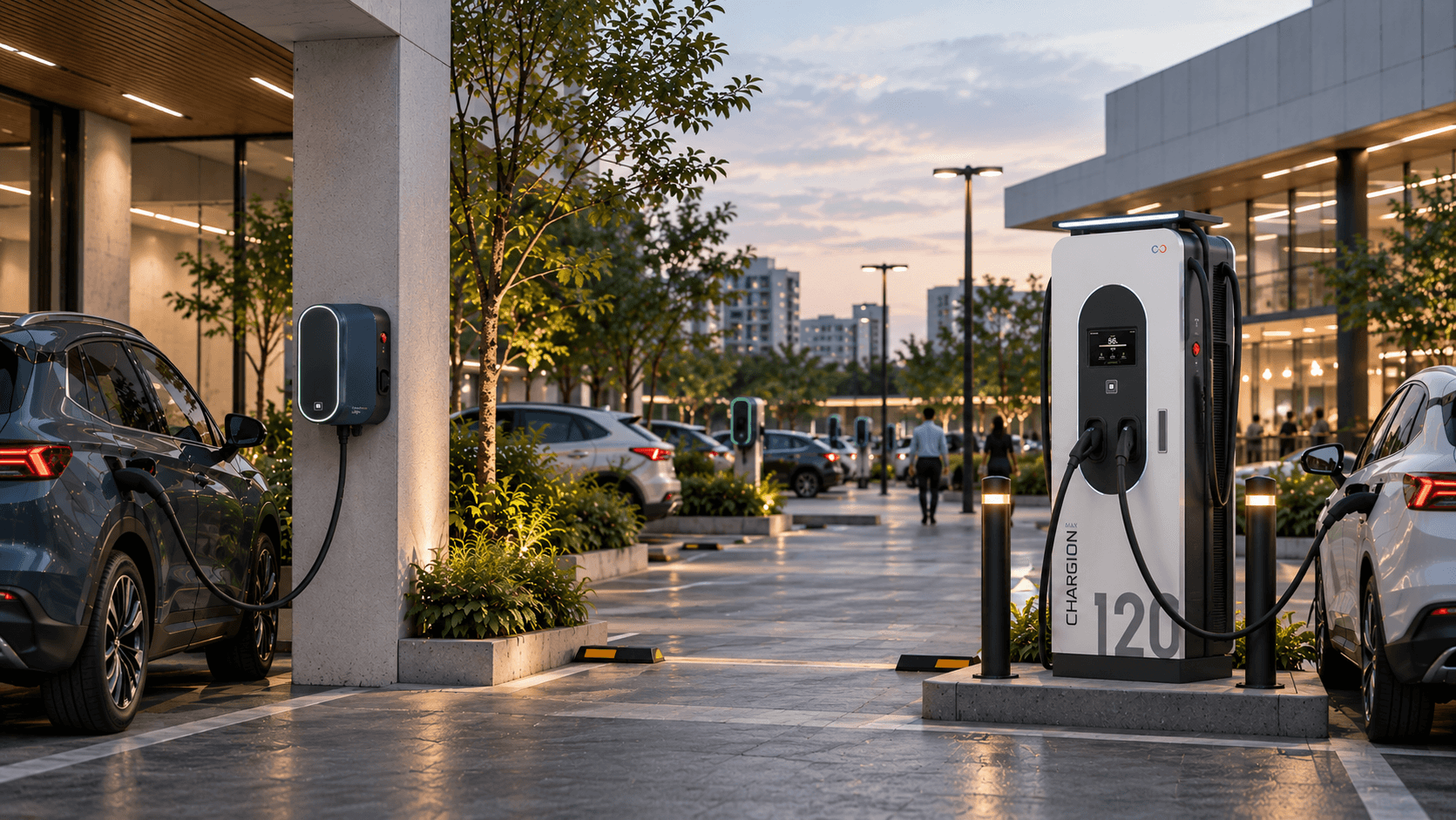
Every EV battery stores energy as DC (direct current), but the power grid supplies AC (alternating current).
The difference between AC and DC charging is where the conversion from AC to DC happens.
How AC Charging Works
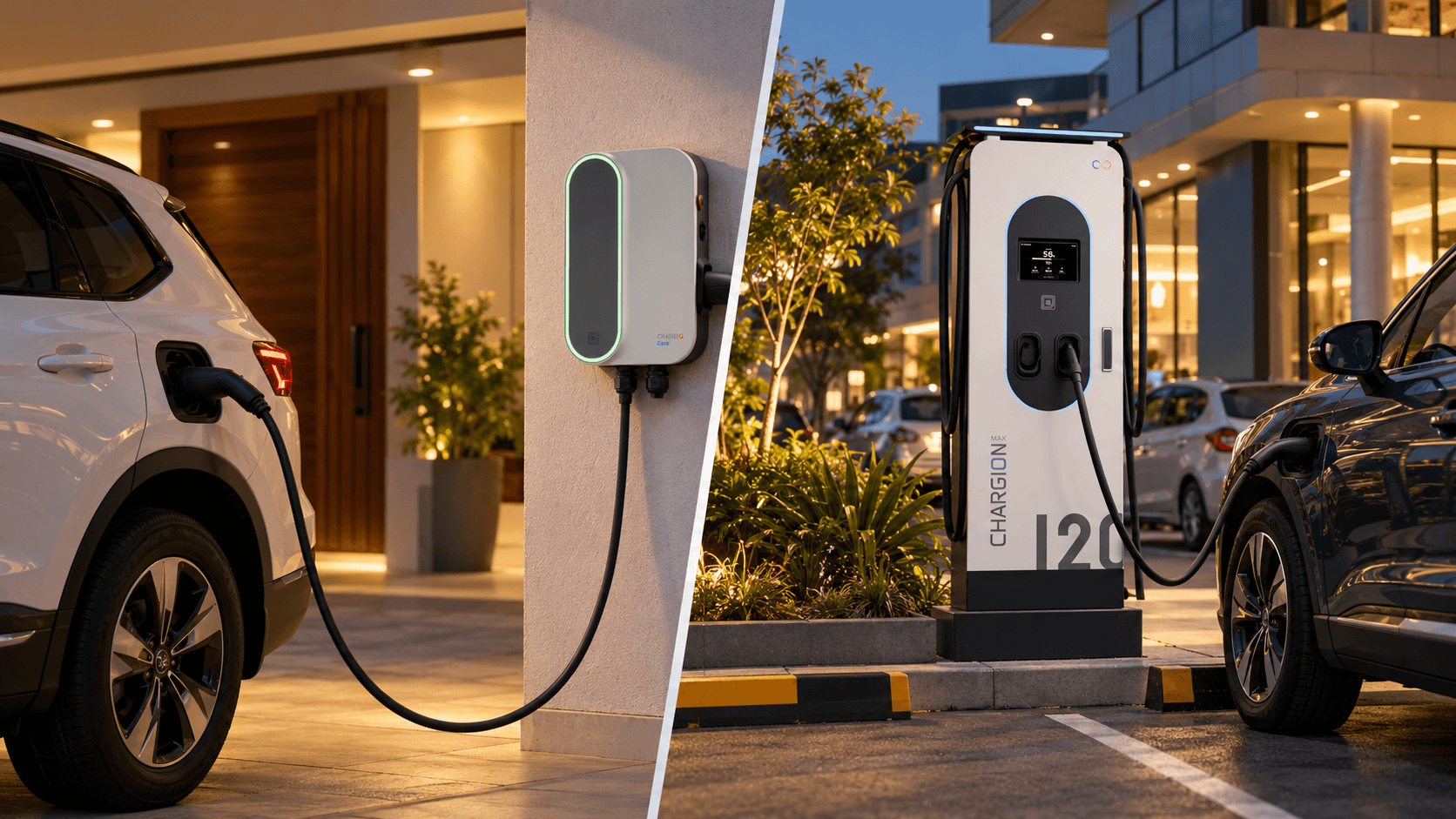
An AC charger sends alternating current to the vehicle. The on-board charger (OBC) inside the car converts it to DC and charges the battery. The charger itself is a simpler, smaller unit that mainly handles safety and communication, so charging speed depends on the car's OBC limit as well as the charger's rating.
How DC Charging Works
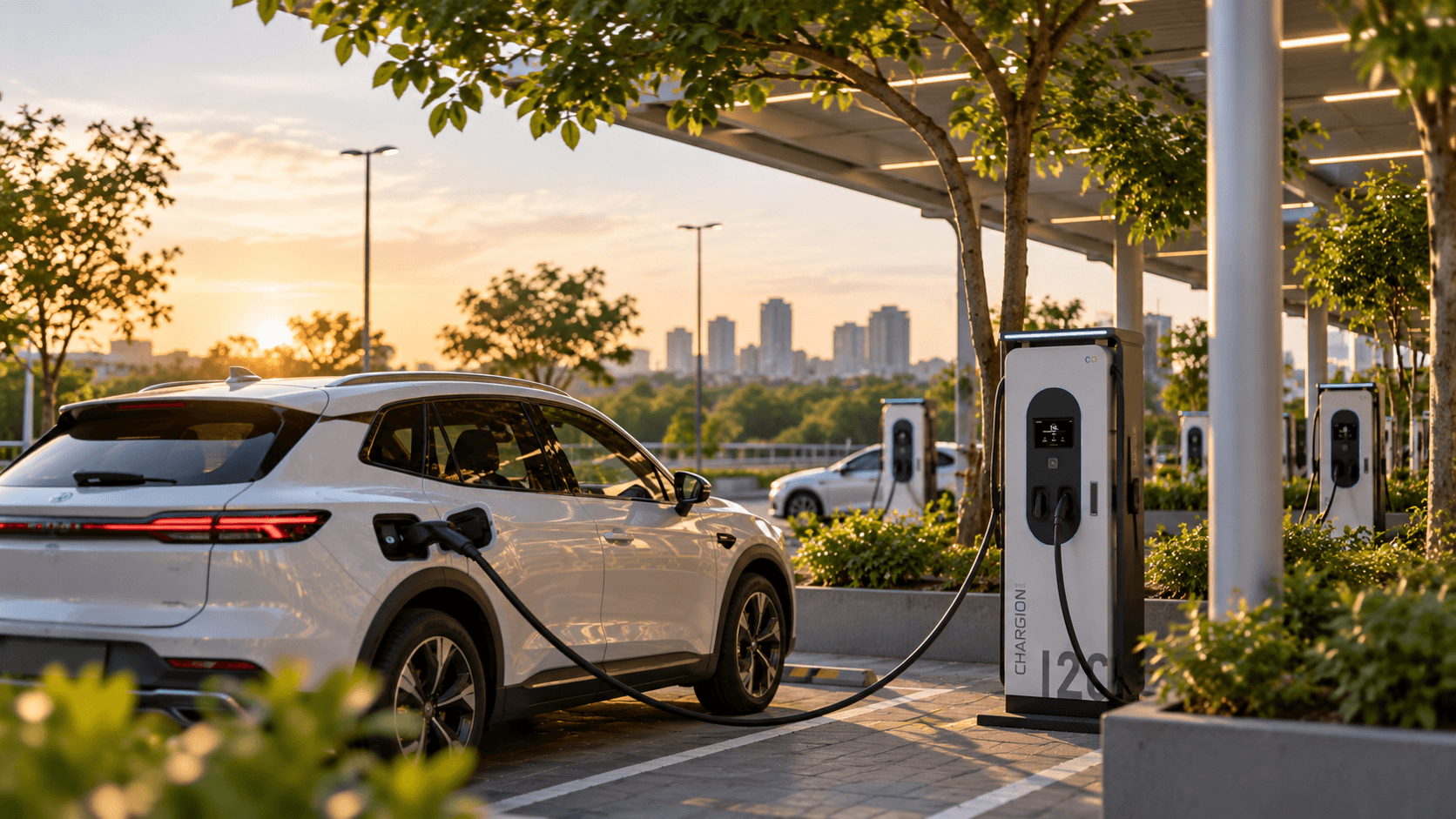
A DC fast charger has a large power conversion unit inside the charger. It converts AC to DC and delivers DC directly to the battery, bypassing the car's on-board charger. This allows much higher power and faster charging.
AC vs DC Comparison
| Feature | AC Charger | DC Fast Charger |
|---|---|---|
| Typical power | 3.3 kW to 22 kW | 30 kW to 350 kW |
| Charging time (typical) | 4 to 8 hours (full charge) | 20 to 60 minutes (to about 80%) |
| Conversion happens | Inside the vehicle (OBC) | Inside the charger |
| Equipment cost | Low | High |
| Installation | Simple, wall or pedestal mount | Needs higher power connection, civil work, cooling |
| Size and weight | Compact | Large cabinet |
| Maintenance | Low | Higher |
| Connectors | Type 1, Type 2, Bharat AC001 | CCS2, CHAdeMO, GB/T, Bharat DC001 |
| Battery impact | Gentle, best for daily use | Fine for occasional use; frequent fast charging can add stress |
| Best for | Overnight and long-parking charging | Quick top-ups and high-traffic locations |
Where to Use Each
AC chargers are best for:
- Homes and apartment societies
- Offices and workplaces
- Hotels, malls and parking lots where cars stay for hours
- Fleets that charge overnight
DC chargers are best for:
- Highways and fuel stations
- Public charging hubs in busy areas
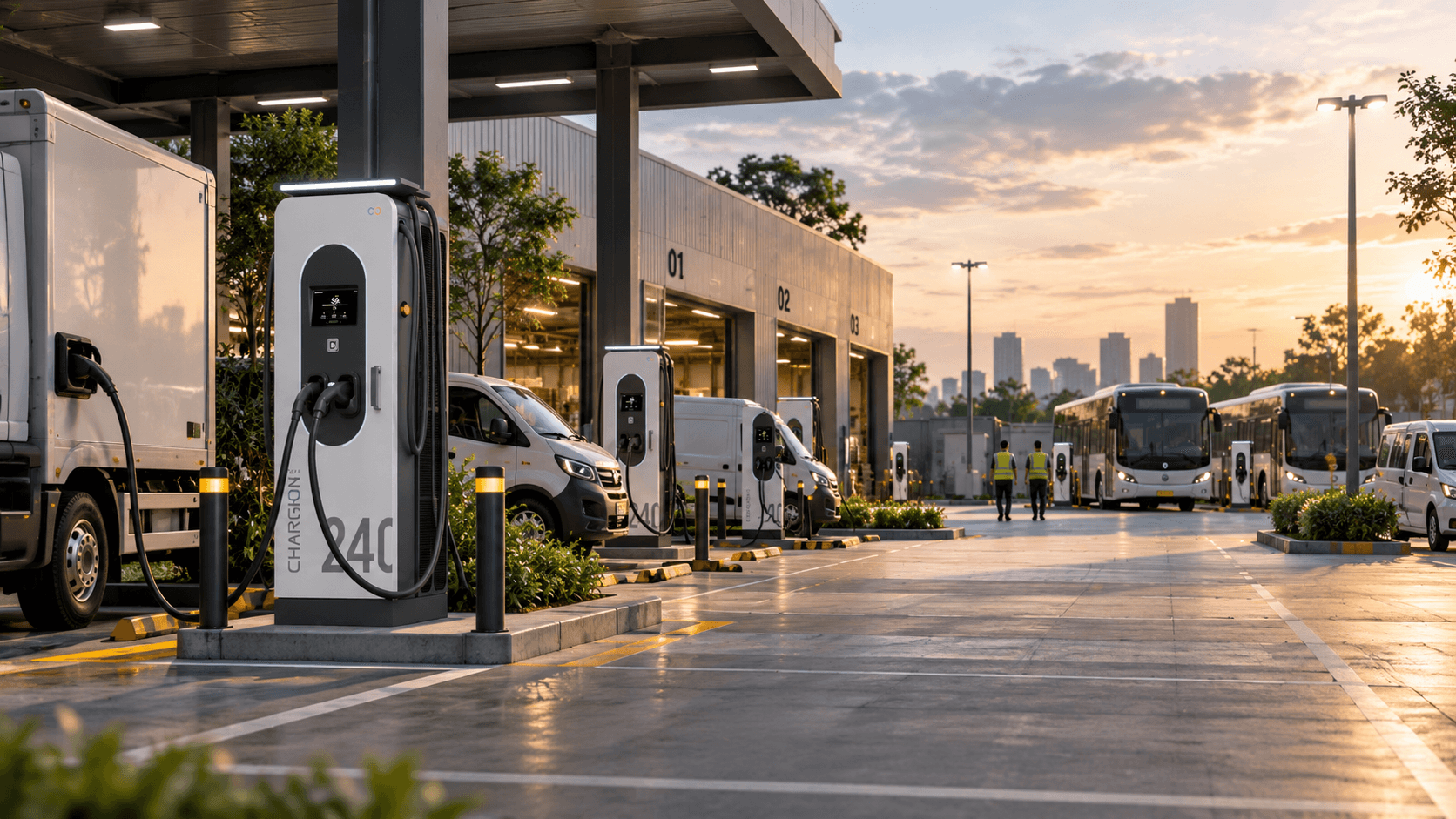
- Taxi, bus and delivery fleets that need fast turnaround
- Locations where drivers stop for only 20 to 60 minutes
Cost and Business View
- AC has low investment and low running cost, so it suits large-volume sales and quick deployment.
- DC has a higher price and higher margin per unit, with better returns at busy sites.
- Many businesses sell both: AC for the bulk of installations and DC for high-traffic sites.
Which One Should You Sell?
- If your customers are homes, housing societies and offices, start with AC.
- If they are highway operators, fleets and public charging networks, focus on DC.
- If you want a full product range under your own brand, offer both, with different power levels for each segment.
FAQs
1. Is DC charging always better?
No. It is faster, but AC is cheaper, simpler and better for regular daily charging.
2. Can a car use both AC and DC?
Most modern EVs support both, but the connector types must match.
3. Does fast DC charging damage the battery?
Occasional use is fine. Frequent fast charging can affect battery life over time, so AC is better for daily routines.
4. Which is more profitable to sell?
AC has higher volume and lower margin per unit, while DC has lower volume and higher margin per unit.
Looking to launch your own branded AC or DC chargers? We manufacture both under white-label. Contact us for specifications, customization and a quote.